
If you’re serious about growing organic traffic, understanding backlinks websites is no longer optional.
Search engines still rely heavily on backlinks as a core ranking factor. But not all backlink websites are equal. Some improve authority and visibility. Others can quietly damage your search engine rankings.
In this guide, you’ll learn:
- What backlink websites actually are
- How to identify high authority backlink websites
- Which backlink platforms are safe
- How to build backlinks strategically
- How to avoid toxic backlinks
This is not just another backlink sites list. It’s a complete strategic framework.
What Are Backlinks Websites?
Backlinks websites are platforms where you can obtain inbound links pointing to your domain. These can include:
- Guest posting sites
- Profile backlink sites
- Directory submissions
- Web 2.0 platforms
- Resource pages
- Business listing platforms
When another website links to your content, it passes link equity, which influences search engine rankings.
How Search Engines Evaluate External Links
Modern algorithms evaluate:
- Authority (Domain Authority / Domain Rating)
- Relevance to your niche
- Contextual placement
- Anchor text variation
- Spam score
- Link diversity
Backlinks for SEO are not about volume anymore. They’re about relevance, authority, and trust signals.
Why Backlinks Remain a Major Ranking Factor
Despite algorithm updates, backlinks remain a top Google ranking factor.
They help with:
- Organic traffic growth
- Website credibility
- Search visibility
- Indexing speed
- Referral traffic
A natural backlink profile signals that your content is valuable. But a spammy backlink profile can trigger manual penalties.
Types of Backlink Sources You Can Use
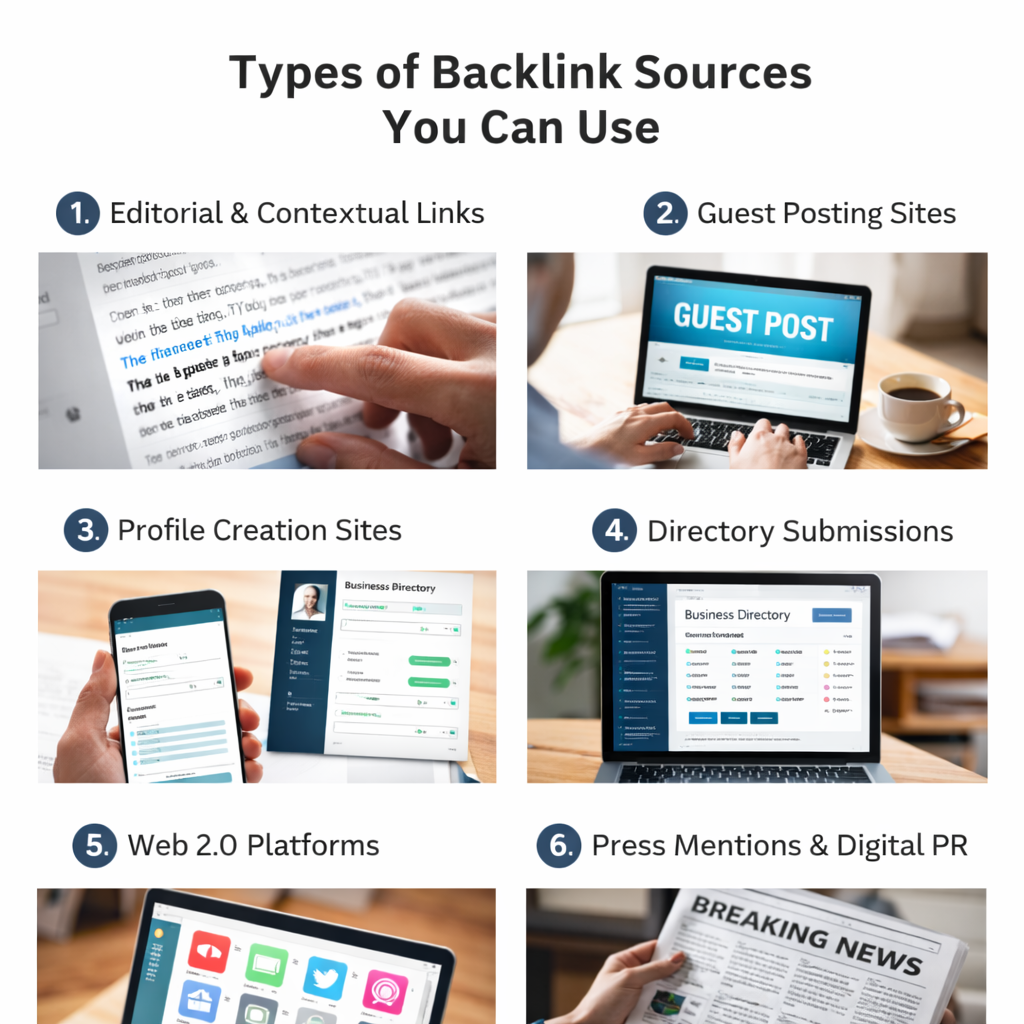
1. Editorial & Contextual Links
These are the most powerful. They appear naturally within content and are highly trusted.
2. Guest Posting Sites
Guest blogging on niche relevant websites builds authority link building opportunities.
3. Profile Creation Sites
Common in free backlink sites lists. Useful for foundation links but should not dominate your strategy.
4. Directory Submissions
Still useful when niche relevant and not mass spam directories.
5. Web 2.0 Platforms
Content-sharing platforms where you publish supporting content.
6. Press Mentions & Digital PR
High authority backlinks from news publications.
Free vs Paid Backlink Websites — What Actually Works?
Many searchers want the best free sites to get backlinks.
Free backlink sources can help:
- New websites
- Bloggers
- Affiliate marketing websites
- Local SEO businesses
But paid outreach often delivers:
- Higher domain authority backlinks
- Stronger contextual placement
- Sustainable growth
Free backlink sites without registration or moderation can sometimes carry risk. The key is evaluating safety.
How to Identify High-Quality Backlink Websites
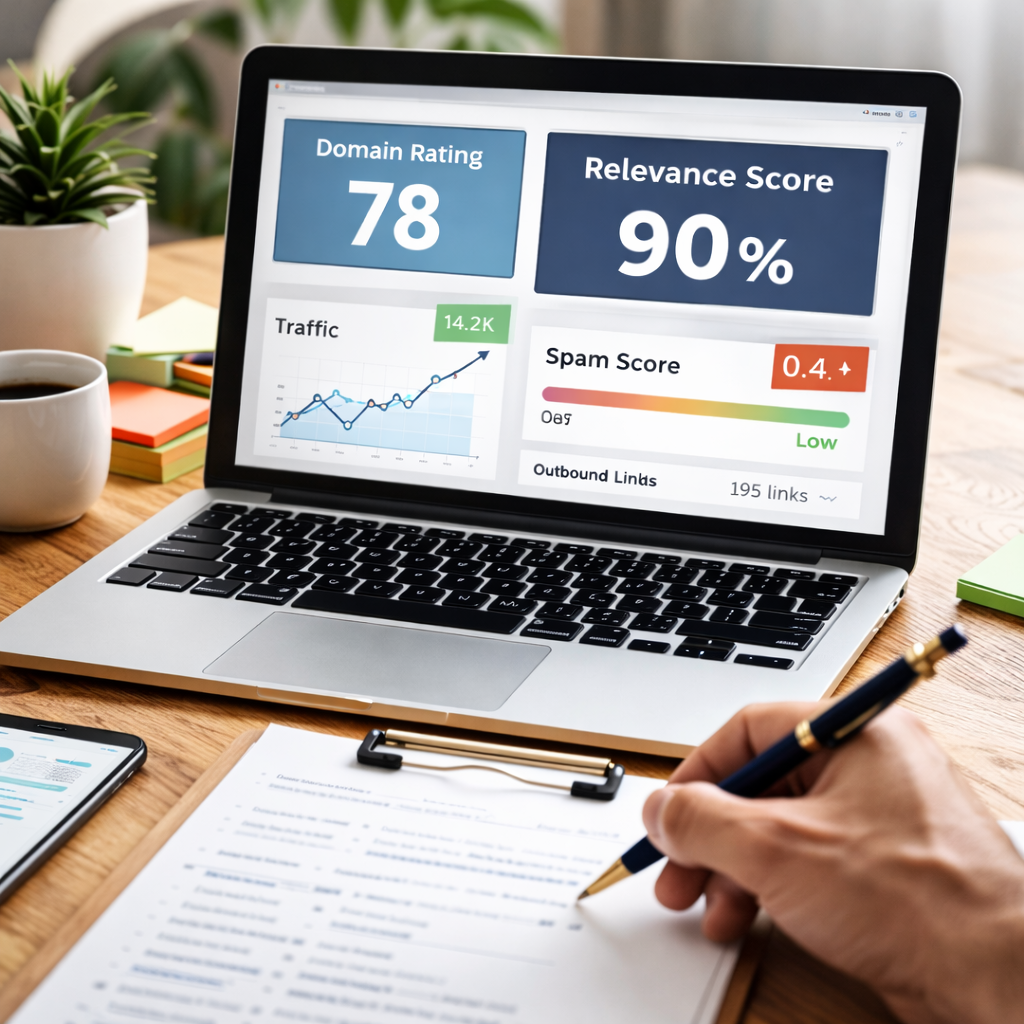
Before using any backlink platform, check:
Domain Authority & Domain Rating
High DR backlink websites pass more value.
Relevance to Your Niche
A SaaS backlink from a cooking blog makes no sense.
Traffic & Visibility Metrics
Look for real organic traffic.
Spam Score Evaluation
Avoid link farms and automated networks.
Dofollow vs Nofollow Context
Both can help, but contextual dofollow backlinks typically carry more ranking influence.
Outbound Link Profile
If a website links to hundreds of unrelated domains, it’s risky.
Red Flags — How to Avoid Toxic Backlink Platforms
Many backlink websites promise instant rankings. Avoid:
- Automated submission networks
- Link farms
- Irrelevant mass directories
- Sudden link velocity spikes
- Platforms selling thousands of backlinks cheaply
Toxic backlinks can cause:
- Ranking drops
- Manual penalties
- Algorithm suppression
Safe backlink building focuses on white hat SEO principles.
Backlink Websites Strategy by Website Type
Different businesses require different backlink building websites.
For SaaS Businesses
Prioritize editorial links and industry publications.
For Bloggers
Guest posting sites and resource pages work well.
For Affiliate Marketing Websites
Authority backlinks and contextual placements outperform profile backlinks.
For Local Businesses
Citation links and business directories are essential.
For New Websites
Start with foundation links from safe free backlink platforms, then move toward outreach.
Step-by-Step Framework to Use Backlink Websites Safely
- Define your link acquisition strategy
- Research relevant backlink websites for your niche
- Analyze authority metrics
- Optimize anchor text naturally
- Diversify link types
- Monitor backlink profile regularly
- Conduct backlink audits quarterly
Consistency beats shortcuts.
Tools to Analyze and Monitor Your Backlink Profile
To maintain a natural backlink profile, use:
- Backlink audit tools
- Competitor backlink gap analysis
- Authority metric trackers
- Toxic backlink detectors
Regular analysis protects against penalties and ensures healthy link growth.
Common Myths About Backlink Websites
Myth 1: More backlinks always mean better rankings
Reality: Quality matters more than volume.
Myth 2: All free backlink sites are bad
Reality: Some free backlink websites are safe when niche relevant.
Myth 3: Nofollow links are useless
Reality: They support backlink diversity and referral traffic.
Myth 4: Directories no longer work
Reality: Relevant directories still support local SEO.
Frequently Asked Questions
Do backlink websites still work in 2026?
Yes, but only when focused on relevance and authority.
How many backlinks does a website need to rank?
It depends on competition, authority of competitors, and keyword difficulty.
Are free backlink sites safe?
Some are. Always evaluate authority, spam signals, and relevance.
Can backlinks hurt your website?
Yes, toxic backlinks can cause ranking loss.
Final Thoughts
Backlinks websites are not about shortcuts.
They are about:
- Strategic link building
- Relevance
- Authority
- Long-term sustainability
Instead of chasing every backlink sites list, focus on building a natural backlink profile through high-quality link building websites.
That’s how sustainable SEO growth happens.